Vibe Coding Solved Building a SaaS. It Didn't Solve Running One.
In 2026 a domain expert can ship a working SaaS in a weekend with no engineer — that barrier fell. The one nobody's talking about is running it after launch: the marketing, support, and testing loops that never stop. Here's why 'build' got solved and 'run' didn't, and how I close the gap as a solo founder.
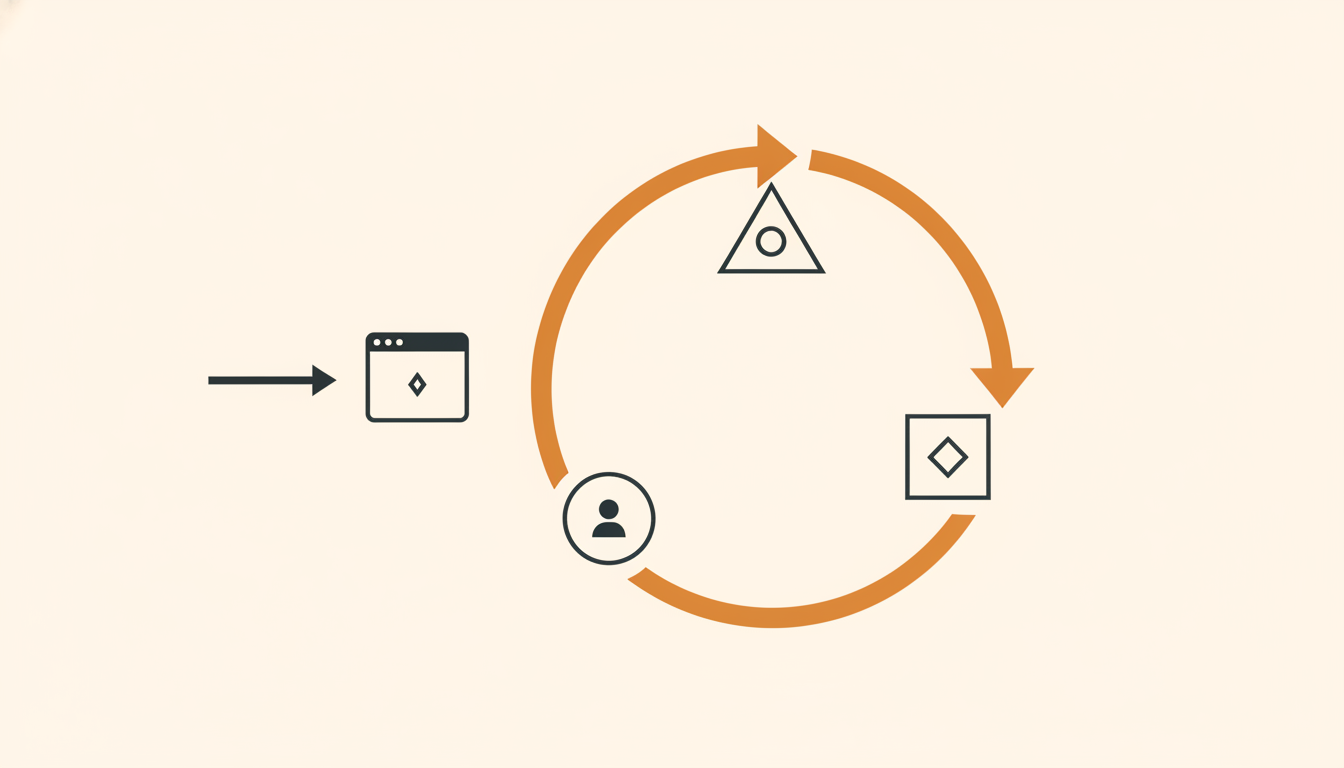
Building a SaaS stopped being the hard part in 2026. A domain expert with no engineering background can now describe a product in plain English, watch a coding agent scaffold it, and put a working v1 in front of real users inside a weekend. The barrier that's left — the one almost nobody writes about — is running the thing after launch: the marketing, support, and testing work that repeats forever and never ships itself. I close that gap by putting those on autonomous loops instead of a team, with a human gate on anything irreversible.
That distinction — build once versus run forever — is the whole game now, and most of the advice online is stuck on the half that's already solved.
The barrier that actually fell was building
Building a first version of a SaaS no longer requires an engineer. This is the genuine shift of 2026, and it's not hype. According to a July 2026 field guide from useauteur, a non-technical founder can now reliably ship "a landing page, a simple internal tool, an MVP, or an automation by describing what they want in plain language" — the vibe-coding category that entered the mainstream in early 2025 and became the default way to prototype.
The people this unlocks aren't random tinkerers — they're domain experts. As Founder Institute reported in July 2026, "solo-founder unicorns are being built by people with 5 to 15+ years inside an industry who finally turned their expertise into a product." The edge was never the code. It was knowing which pain was worth solving, and that's the one thing a model can't hand you.
The numbers back the shift in who's founding: aicofounderstack notes that 36.3% of startups are now solo-founded, and climbing. When one person can build what used to need a team, the team stops being a prerequisite.
So the "can I build it without a developer" question is basically closed. Yes, within a contained scope, you can. Which is exactly why it's the wrong question to still be asking.
The barrier nobody's talking about is running it
Building is a one-time event; running is a permanent condition — and only building got automated. As useauteur put it bluntly, "the hard limit isn't the code — it's the company." AI can build your app. It can't register your business, answer your fifth support ticket of the day, or notice that your signup flow broke overnight.
Here's the asymmetry that matters:
| Build | Run | |
|---|---|---|
| Shape of the work | One-time, bounded | Recurring, unbounded |
| When it happens | Before launch | Every day after, forever |
| 2026 tooling | Mature (Cursor, Claude Code, Lovable, Bolt) | Fragmented, mostly manual |
| What it needs from you | A clear spec | Constant attention |
| Failure mode | Ships late | Quietly rots — churn, bugs, silence |
Every viral demo is a build demo. Type a sentence, watch an agent make a feature, applause. Nobody films the part where you're six weeks post-launch, drowning in the recurring work: the blog post you never wrote, the Reddit thread where someone described your exact problem and you never saw it, the error your users hit for three days before you noticed. That work has a paycheck attached — it's what founders used to hire contractors and agencies for — and vibe coding does none of it.
Why "run" is harder than "build" for a solo domain expert
Running a SaaS is a set of loops, not a project with an end. A build is a magic trick you can leave running because it finished. Operating is a magic trick that needs a magician standing next to it — until you wrap the model in enough machinery that you can walk away.
The recurring loops of a one-person business break down into three that never stop:
- Marketing — long-form articles drafted as PRs, daily ad-spend monitoring, Reddit threads surfaced with drafted replies. Weekly-or-more, forever.
- Support — triage every incoming ticket, auto-resolve the well-defined ones, draft the rest with full context, and cluster recurring questions into the docs gaps they expose.
- Product reliability — synthetic users dogfooding the product on a schedule, whatever breaks becoming a bugfix PR, real client errors triaged before your users churn over them.
A domain expert can now build the product that solves their industry's pain. What they still can't do alone is staff the operation around it. That's the gap the vibe-coding conversation skips entirely.
The answer isn't another chat tool — it's loops
The way to run a SaaS solo isn't to prompt a chatbot harder; it's to put the recurring work on autonomous loops. A chat tool is one more thing you have to sit down and drive. A loop runs on a cron whether you're at your desk or asleep, and hands you a reviewable artifact — a pull request, a drafted reply, a drafted article — when it's done.
That's what I built 1mn to be: the operations team for a solo founder who can now build but can't hire. It runs three loops — Product, Marketing, and Support — on a schedule, and every irreversible action (spending money, deploying code, replying to a customer) waits behind a human gate for my approval. It replaces the roughly $14,500/month of contractors and agencies a one-person business can't afford with one subscription at $20/workspace/month — 10 task runs included, unlimited when you bring your own Claude — and you bring your own Claude access so you control the model spend.
If you've shipped a v1 and hit the wall where operating it eats every hour you have: start the 14-day free trial — no per-seat pricing, cancel anytime — and connect a Cloudflare or Vercel project plus GitHub to activate the loops.
What still needs you: the human gate
Autonomy without a gate is a liability, not a feature. The reason "run" can't be fully handed off is that some actions are irreversible, and those are exactly the ones a model shouldn't take alone. The credible 2026 playbooks all say the same thing: automate the repeatable, gate the consequential.
There's a rough taxonomy, and dev.to drew a clean version of it in July 2026 — agents work unsupervised on adding a page or a database column, but a founder reviews every change to auth logic, billing webhooks, and the deploy config. getpancake's autonomous-company guide lands in the same place: configure agents for the rule-based work, then "create escalation paths for edge cases" and review output before it goes live.
That's the shape of running a solo SaaS in 2026. The loops do the recurring work. The gate keeps the irreversible stuff your call. Your product stays yours — the machine just runs the shifts you used to work yourself.
FAQ
Can a non-technical founder really run a SaaS without engineers in 2026? You can now build one without engineers, within a contained scope. Running it — the ongoing marketing, support, and reliability work — still needs either your constant attention, hired help, or autonomous loops doing the recurring work with you approving anything irreversible.
Is vibe coding enough to launch a product? It's enough to launch a v1. According to useauteur (July 2026), vibe coding reliably ships landing pages, internal tools, MVPs, and automations. It stops at the company around the product: the operations, the customer-facing work, and long-term maintenance.
What's the hardest part of a one-person SaaS after launch? The recurring work that never ends — content, ad monitoring, support triage, and catching bugs before users churn. Building happens once; these repeat forever, which is why they're where solo founders drown.
Why domain experts instead of engineers? Because the scarce input is knowing which industry pain is worth solving, and a domain expert already has it. Founder Institute reports solo-founder unicorns are increasingly built by operators with 5–15+ years inside an industry. AI supplies the build capability they were missing.
What is a "human gate" and why does it matter? It's an approval checkpoint on any irreversible action — spending money, deploying code, messaging a customer. It matters because full autonomy on consequential actions is a liability; the safe pattern is automate the repeatable, gate the rest.
1mn builds the autonomous loops that run a one-person software business — product, marketing, and support — on a schedule. We write about what we learn shipping it.